Daedalus Reef Diving: Hammerhead Season and Liveaboard Tips
Daedalus Reef — Abu al-Kizan in Arabic — is a remote, circular reef rising from deep water in the middle of the Red Sea, crowned by a lone lighthouse. Reachable only by liveaboard, it is one of Egypt’s most thrilling offshore sites, famous for hammerhead schools, sheer coral walls and pristine, current-swept diving. This guide covers what makes Daedalus special, the marine life, conditions and how to dive it.
What makes Daedalus special
Daedalus is an isolated pinnacle far from any coast, which means it acts as a magnet for open-water life. Its walls drop vertically into the blue and are covered in healthy hard and soft corals, while the surrounding deep water brings in pelagic species that are rare closer to shore. The reef is exposed to open sea on all sides, so conditions can be demanding — and the rewards are correspondingly big.
Hammerheads, mantas and more
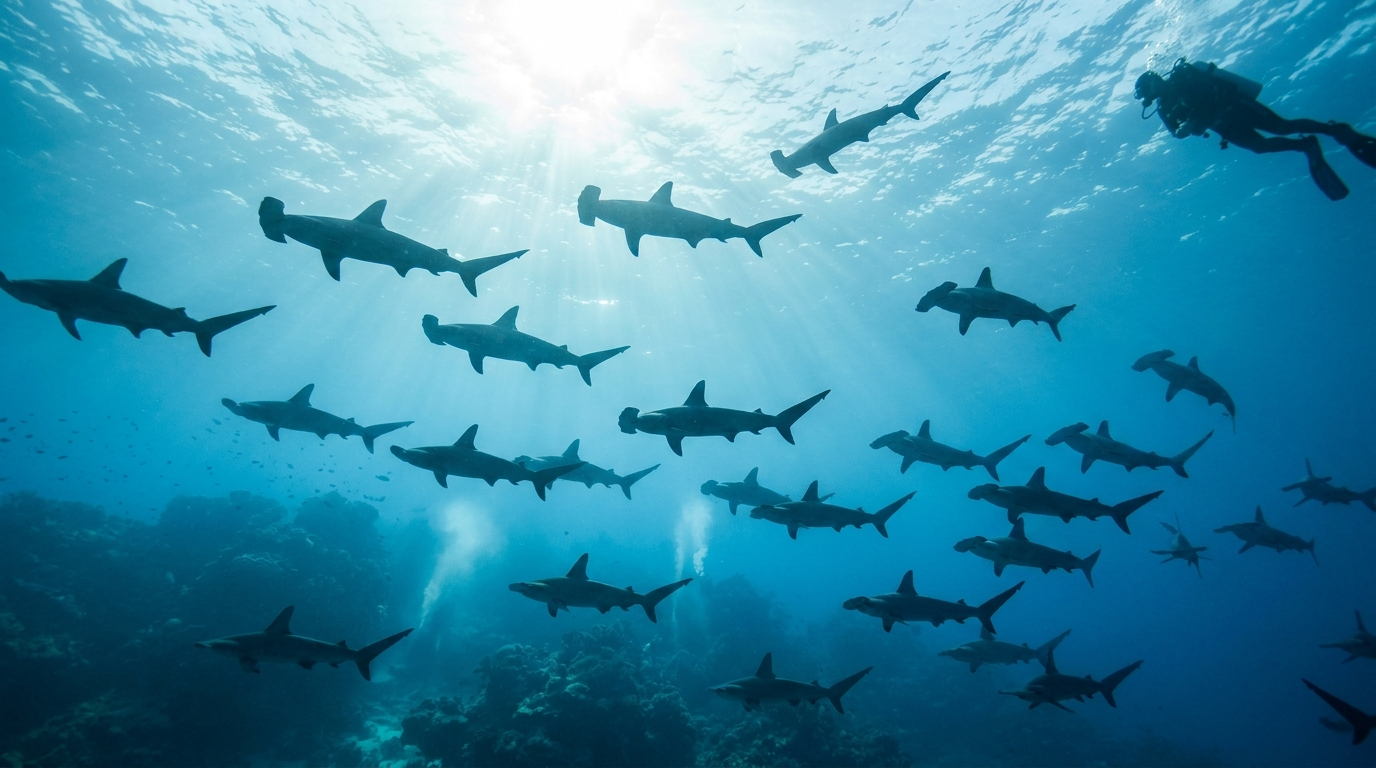
Daedalus is best known for its schooling scalloped hammerheads, most reliably seen off the northern point in the summer months when divers descend into the blue at dawn hoping to meet them. Beyond the hammerheads, the reef offers:
- Oceanic whitetip sharks, often curious and close, in the warmer season.
- Grey reef and thresher sharks along the walls.
- Manta rays passing through, particularly in autumn.
- A stunning anemone city and gorgonian-draped walls on the eastern and southern sides.
Conditions and experience level
Daedalus is an advanced, blue-water dive. Currents are frequently strong, the walls are deep, and hammerhead dives often involve descending away from the reef into open water. Operators require an Advanced certification, a solid logged-dive count and confidence in current and negative-entry descents. Nitrox is standard and strongly advised.
| Detail | Typical range |
|---|---|
| Access | Liveaboard only |
| Level | Advanced + logged-dive minimum |
| Currents | Often strong |
| Best for hammerheads | Summer, early morning |
How to dive Daedalus Reef
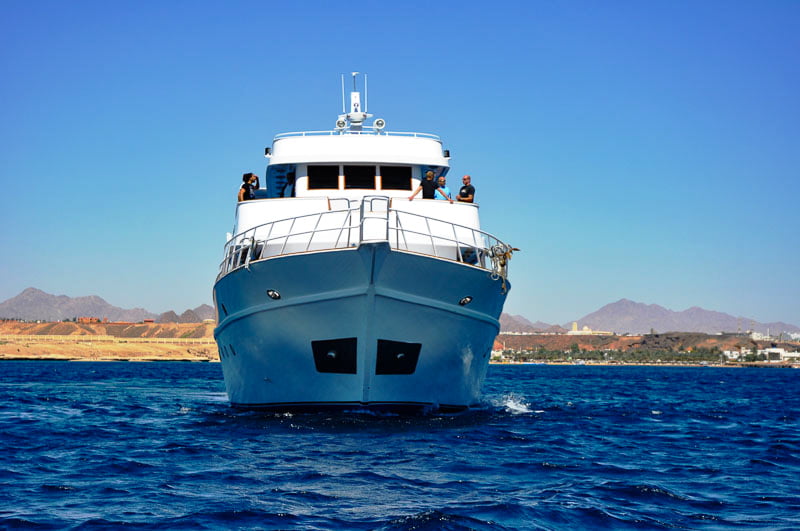
Daedalus is dived on liveaboard itineraries out of Marsa Alam, Port Ghalib or Hurghada, most commonly on the classic Brothers–Daedalus–Elphinstone route. As a protected offshore reef, access can be seasonal. To plan, see our Red Sea liveaboard safaris guide, explore our liveaboard options, and read the companion Brothers Islands guide.
Frequently asked questions
When can you see hammerheads at Daedalus?
Schooling scalloped hammerheads are most reliably seen in the summer months, typically on early-morning dives off the northern point where divers drop into the blue to meet them.
How do you dive Daedalus Reef?
By liveaboard only. It sits far offshore in the central Red Sea and features on multi-day safaris, often combined with the Brothers and Elphinstone.
Is Daedalus suitable for beginners?
No. It is an advanced site with strong currents and deep blue-water diving. Divers should hold an Advanced certification, have a good logged-dive count and be comfortable in current.
What else can you see at Daedalus besides hammerheads?
Oceanic whitetip and grey reef sharks, thresher sharks, passing manta rays in autumn, plus superb coral walls and a large anemone city.
Chasing hammerheads in the open Red Sea? Build your custom liveaboard safari with Repack Travel.
Recent Posts
What to Pack for a Red Sea Diving Trip: The Essential Checklist
Marsa Alam vs Hurghada: Which Is Better for Diving?
Diving Hurghada: Reefs, Wrecks and the Giftun Islands
Marsa Alam