Red Sea Liveaboard Safaris: Brothers, Daedalus, Elphinstone & St John’s
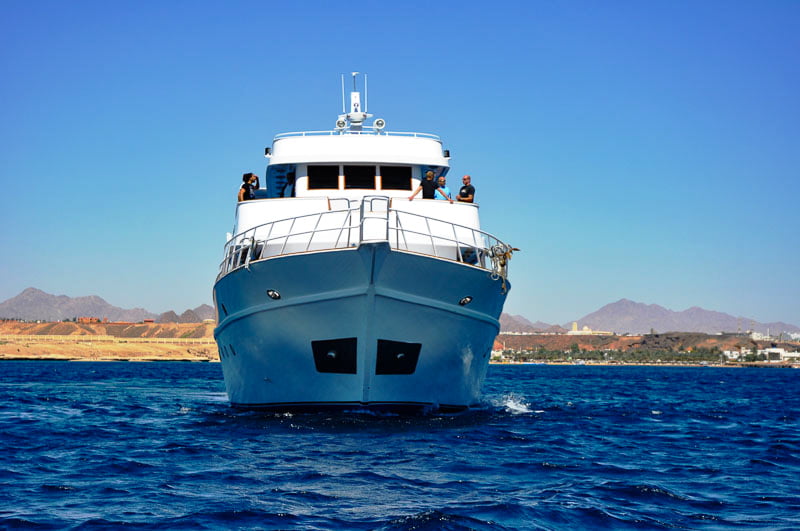
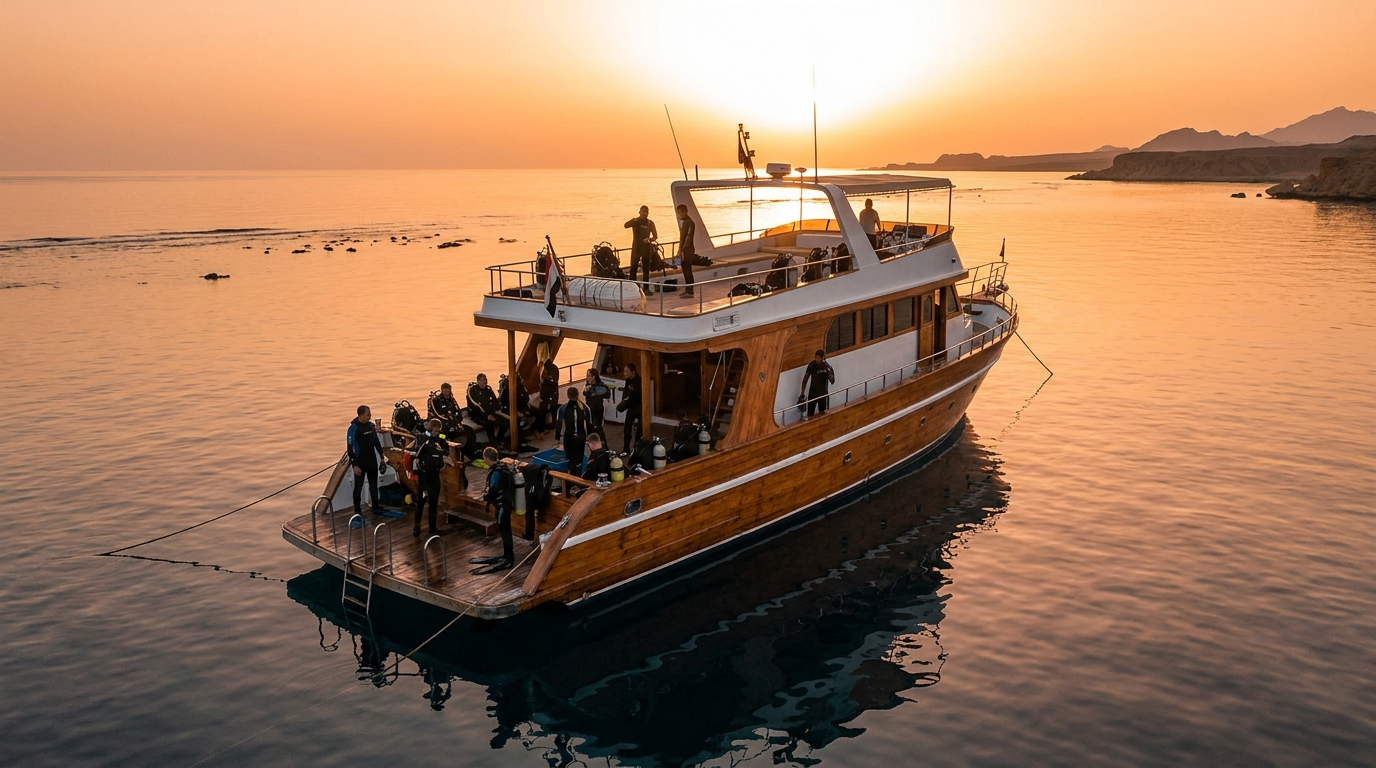
If you want to dive more and reach reefs day-trippers cannot, a liveaboard is the way to do it. You live aboard the boat, dive three to four times a day, and wake up already anchored at the next world-class site. This guide explains how Red Sea safaris work, the classic routes, a typical day on board, what is included, who they suit, and how to choose the right one.
What is a liveaboard safari?
A dive boat with cabins that takes a small group on a multi-day route, with all meals, guided dives, tanks and weights included. Because you sleep at sea, you reach remote offshore reefs that are impossible on day trips — and you dive far more per day, giving the lowest cost-per-dive of any Red Sea trip.
The classic Red Sea routes
Brothers, Daedalus & Elphinstone
The famous “BDE” shark route: sheer walls, big blue and summer pelagics including oceanic whitetips, grey reef and schooling hammerheads. Big-animal diving for the experienced.
Deep South & St John’s
Pristine hard-coral reefs, caves and reliable dolphins right at Egypt’s southern edge — Fury Shoals, St John’s and Sataya.
North & wrecks
The SS Thistlegorm, Ras Mohammed and the Abu Nuhas “ship graveyard” wrecks — a mix of iron and reef, and a great choice in the cooler months.
A typical day on board
Most safaris run to a comfortable rhythm: an early check dive, breakfast, then dives spaced through the day with meals and rest between, often finishing with a dusk or night dive. Between dives you relax on deck, review photos or simply enjoy the open sea.
What is included — and what is not
Cabin, full board, guided diving, tanks and weights are standard. Nitrox, equipment rental, marine-park fees and gratuities are usually extra. Always check the dive count and whether a guide is included.
Who liveaboards suit & the requirements
Liveaboards suit certified, reasonably experienced divers who want maximum diving. Some offshore routes ask for an Advanced certification and a minimum number of logged dives because of current and depth — we will match you to a route that fits your experience.
Best time to go
Summer is prime for sharks on the BDE and Deep South routes; the northern wreck-and-reef itineraries are excellent year-round and especially good in the cooler months.
Frequently asked questions
Do I need to be an experienced diver for a liveaboard?
For most routes, yes — certified with some logged experience. Northern reef-and-wreck routes are the most accessible; shark routes ask for more.
How many dives will I get?
Typically three to four a day, so a week-long safari can mean 15–20+ dives.
Is a liveaboard good value?
Yes — despite the higher up-front price, the number of dives makes it the lowest cost-per-dive option.
When is the best time for sharks?
Summer, on the Brothers, Daedalus and Elphinstone route.
Plan your Red Sea liveaboard
Tell us your experience level and the reefs you most want to see and we will match you to the right boat and route. See our Red Sea liveaboard safaris, compare a shore-based Marsa Alam stay, or build a custom trip.
Recent Posts
What to Pack for a Red Sea Diving Trip: The Essential Checklist
Marsa Alam vs Hurghada: Which Is Better for Diving?
Diving Hurghada: Reefs, Wrecks and the Giftun Islands

Marsa Alam