What to Pack for a Red Sea Diving Trip: The Essential Checklist
Packing for a diving holiday is a balance: bring what makes your dives comfortable, but don’t lug gear you don’t need. The Red Sea’s warm water and reliable conditions actually make packing easier than most destinations. This Red Sea diving packing checklist covers exactly what to bring — and what you can safely leave at home.
Dive gear: what to bring
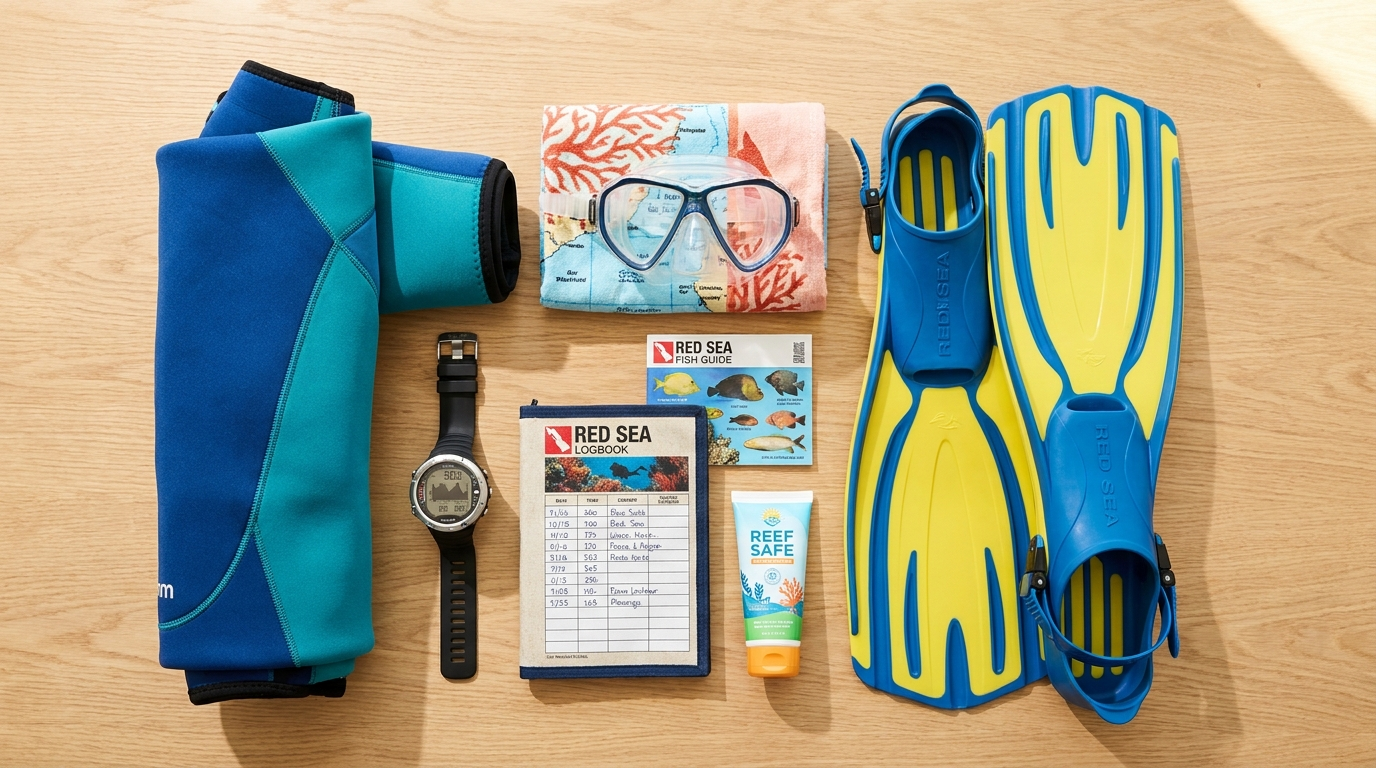
Most Red Sea dive centres and liveaboards rent full equipment, so you can travel light if you prefer. But a few personal items are worth packing for comfort and fit:
- Mask (and a spare) — a well-fitting personal mask makes every dive better.
- Wetsuit — a 3mm shorty or full suit is ideal for most of the year; a 5mm for winter. See our seasonal guidance below.
- Dive computer — strongly recommended, especially for repetitive daily diving and Nitrox.
- Reef-safe sunscreen — protect your skin and the coral.
- Certification card and logbook — digital copies are fine, but bring proof of certification.
- Optional: your own regulator, fins, and a surface marker buoy (SMB) if you have them.
What wetsuit for the Red Sea?
| Season | Water temp | Suggested wetsuit |
|---|---|---|
| Summer (Jun–Sep) | ~28–30°C | 3mm shorty or rash guard |
| Spring/Autumn | ~24–27°C | 3mm full suit |
| Winter (Dec–Feb) | ~21–23°C | 5mm full suit + hood |
For a month-by-month breakdown, see our guide to the best time to dive the Red Sea.
Clothing and topside essentials
- Lightweight, breathable clothing and swimwear (bring two sets).
- A warm layer for evenings, especially on winter liveaboards and boat decks.
- Hat, sunglasses and high-SPF sunscreen — the Egyptian sun is strong.
- Sandals or reef shoes, and a light rain/wind layer for boat days.
- A modest cover-up for visiting towns and cultural sites.
Health, documents and money
- Travel and dive insurance — make sure your policy covers scuba diving to your planned depth.
- Passport, visa (Egypt offers e-visa and visa-on-arrival for many nationalities), and travel documents.
- A small first-aid kit, personal medications, and seasickness tablets for liveaboards.
- Some cash in local currency for tips and small purchases.
What you can leave at home
Tanks and weights are always provided, so never pack those. Full gear rental is widely available and good quality, so if luggage space is tight, hiring BCD, regulator and fins on-site is perfectly fine. And remember the golden rule: allow at least 18–24 hours of no-fly time after your last dive before flying home.
Ready to plan the trip?
Once you’re packed, the fun part is choosing where to dive. Start with our guide to the best dive sites in the Red Sea, our beginner’s trip planner, or explore diving in Marsa Alam and Sharm El Sheikh.
Frequently asked questions
What should I pack for a Red Sea diving trip?
Bring a well-fitting mask, an appropriate wetsuit for the season, a dive computer, reef-safe sunscreen and proof of certification. Tanks, weights and full gear rental are available on-site, so you can travel light if you prefer.
What wetsuit do I need for the Red Sea?
A 3mm suit works for most of the year, a shorty or rash guard is enough in summer, and a 5mm with a hood is best in winter when water drops to around 21–23°C.
Do I need my own dive gear?
No. Red Sea dive centres and liveaboards provide quality rental equipment. A personal mask and dive computer are the items most worth bringing for comfort and safety.
How long should I wait to fly after diving?
Allow at least 18–24 hours of no-fly time after your final dive to reduce decompression risk. Plan your last diving day accordingly.
Packed and ready? Build your custom Red Sea diving trip with Repack Travel.
Recent Posts
What to Pack for a Red Sea Diving Trip: The Essential Checklist
Marsa Alam vs Hurghada: Which Is Better for Diving?
Diving Hurghada: Reefs, Wrecks and the Giftun Islands

Marsa Alam